


Around this time in August in 1920 an island exploded in New York
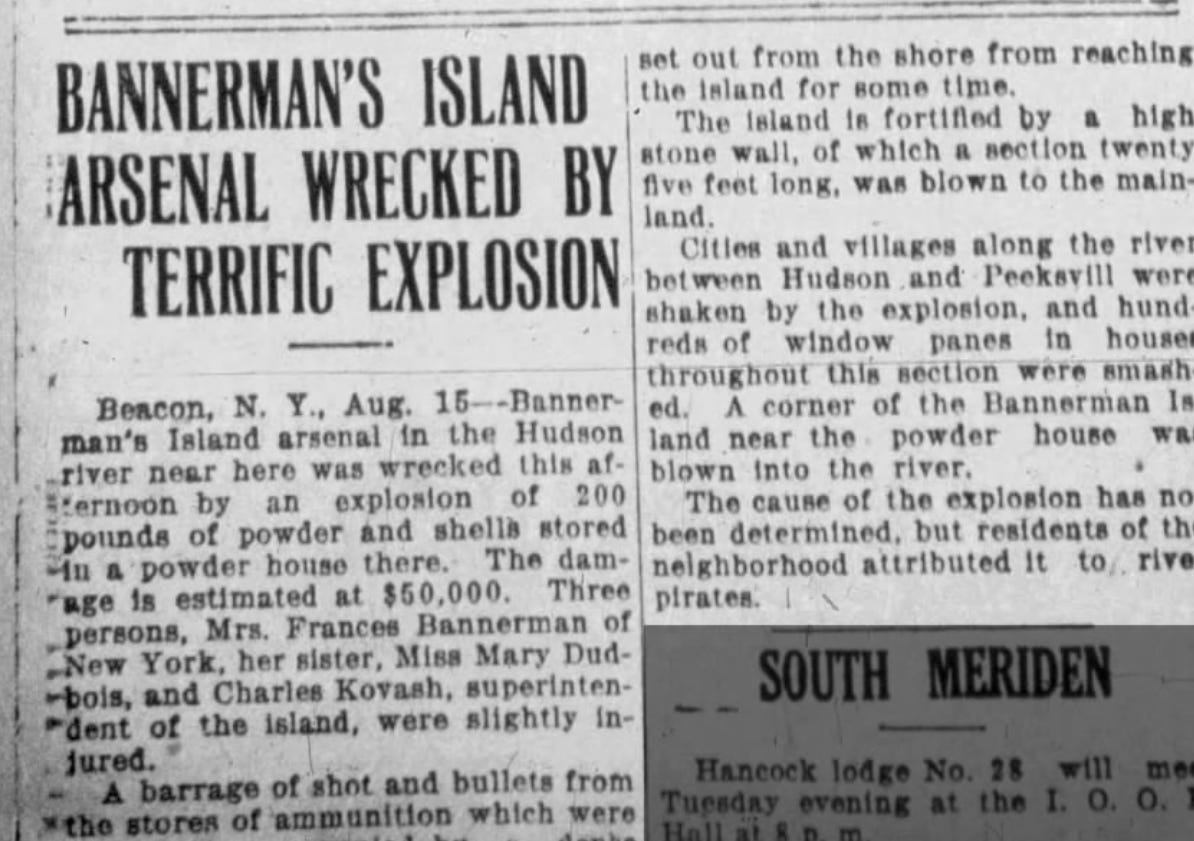
Arms dealer, Francis Bannerman, was told to remove all of his explosive arsenal from New York so he bought an island and built an authentic Scottish castle (a real flex if you ask me) and stashed it there until it was fourth of July all over again.
It was an amusing story I read today but thought maybe there is something to share to readers. Apparently something of interest.
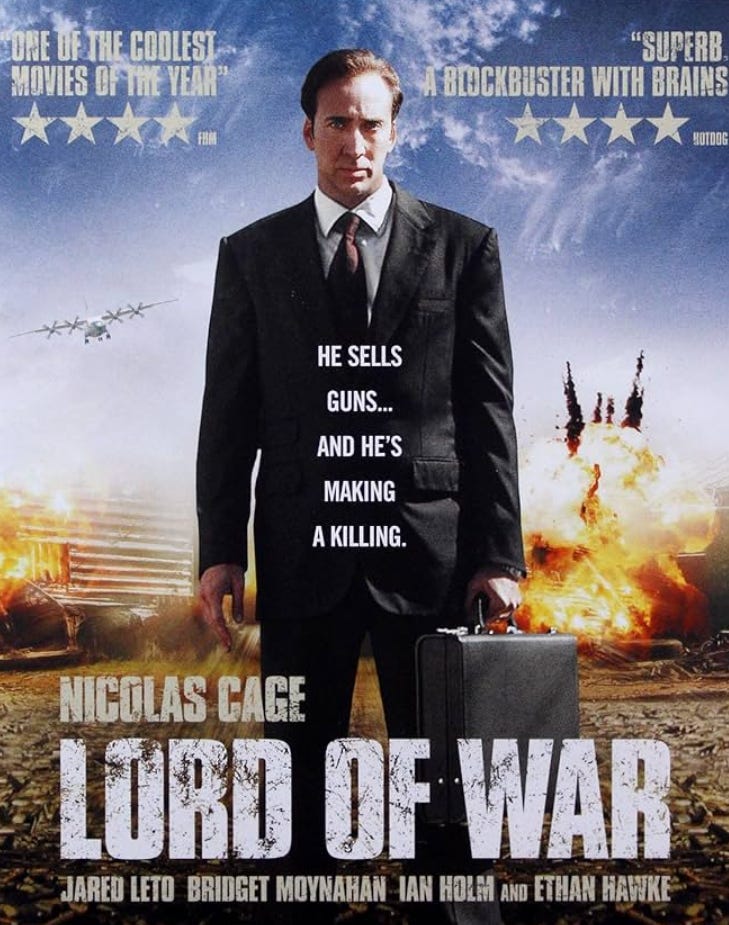
So who is this arms dealer? Was he like Nicholas Cage in Lord of War?
Francis Bannerman made his fortune doing something that sounds remarkably familiar to anyone who has ever bought at a flea sale, a garage sale to a beaten-down stock, a bankrupt company’s assets, or…
a warehouse full of merchandise nobody else wanted, military equipment and weapons.
Among his earlier ventures, was in 1898 after the Spanish-American War ended, he went to Havana and bought almost all the captured Spanish arms and ammunition.
The question and a very important one for any businessman:
Does the seller’s desperation have anything to do with the actual value of what was being sold?
(On X, I asked this after a mortgage company had a devastating 35% stock price crash)


With governments they tend to have huge inventory after a war and if there is no use it’s best to sell it.
After a NY Times article many years ago, I tried, myself, to buy all types of war scraps in Iraq that we had lying around but to no success. I attribute it completely to no system or discipline on my part that tends to be revealed very quickly when attempting this.
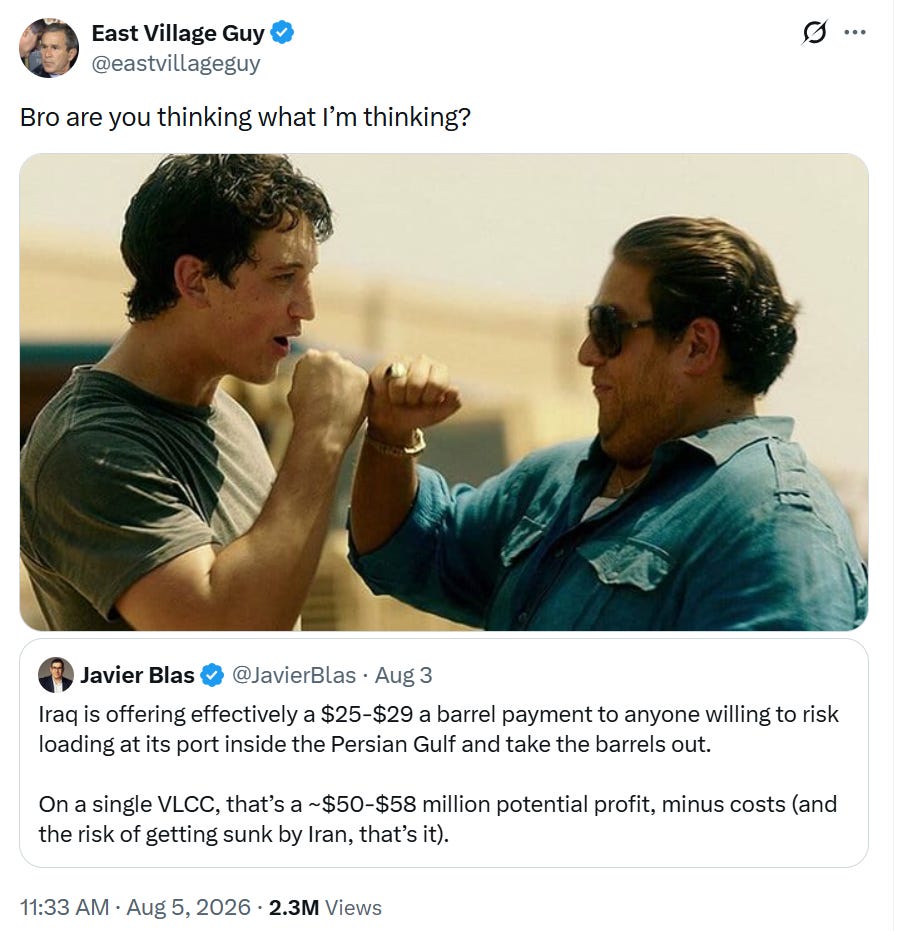
Which is why when I saw this tweet on X, I am there bro. I have the right tools now to do but not youthfulness.
Back to Bannerman.
When there is a surplus, most individuals don’t want to be involved as there is now way to tell when things will turn around which is why the opportunity exists.
Surplus must always be seen as inventory. He understood that concept and made him rich.
And now with inventory, the question is who do you sell it to?
One account describes him as recognizing that goods being disposed of at scrap prices could have considerably greater market value.
I noticed that scrap yards themselves have done this very well, taking some of what they purchased at scrap prices and selling at a discounted retail price.
Copart is famous for this.
Bannerman eventually turned these surpluses into a massive retail operation. He published catalogs and sold nationally, an early direct-to-consumer business. His Manhattan storefront became the showroom while the island served as the back-end warehouse. In modern terms, he was TJ Max and Big Lots wrapped up into one with the added section next to the Men’s pants, explosives and artillery. Fun fact: his Broadway location opened in 1905 and stayed a mecca for collectors and sportsmen for 54 years.
He was very wealthy and before his death, and during WWI, he gifted 1,000 uniforms and rifles to the Lord Mayor of London in 1914, and in 1918 gave cannons to the US military along with tens of thousands of garments for Belgian relief, with his total wartime contributions exceeding $100,000.
That’s not small money for 1918
But when you buy at the right price, you can afford setbacks and create lasting value. So an explosion or two won’t set back the venturesome type like Bannerman.
To learn more about this character who would probably make a great movie character, visit HERE
This is what I try to do here.
Find overlooked stories, strange businesses and beaten-down assets—and ask whether the market is confusing unwanted with worthless.
If that way of looking at markets interests you, become a paid subscriber. I’ll be doing more deep dives into companies, industries and situations where the seller may be telling us more than the price does.
The interesting question is whether something is cheap because it’s bad, or cheap because the seller just wants it gone.