

Right Place, Wrong Time
What Carl Icahn’s $9 Billion Mistake Teaches Us

This is a follow-up to yesterday’s missive about how the stock market, as measured by the first and most mighty index, Dow Jones Industrial Average, is in crash mode if you price it in terms of Gold since 2000.
The biggest loser of shorting the stock market and not buying gold has unfortunately been Carl Icahn. He has suffered reputationally and financially as a result.
Until recently, he has been just as successful as Warren Buffett. But this time, his insight and execution were the right viewpoint, but the wrong timing.
And boy, has everyone come out saying he lost his edge, and is senile.
But this tweet from well-known futures and crypto trader Peter Brandt stopped me cold.
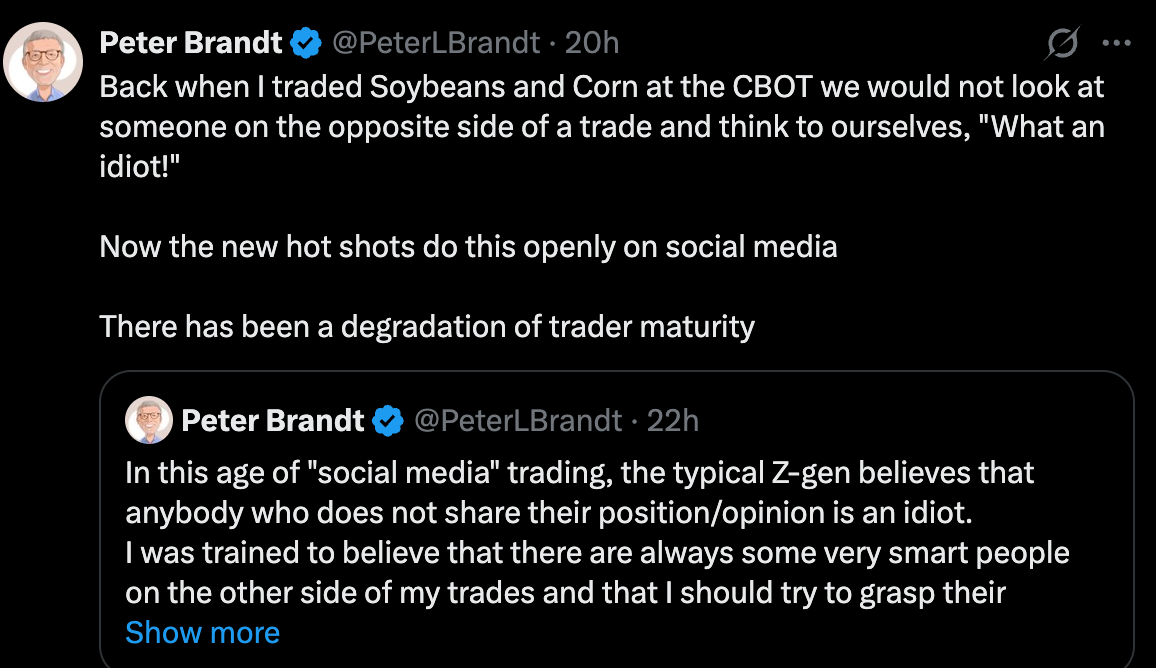
His tweet was simple but profound: Back in his pit-trading days, you would never look at someone on the other side of a trade and think, “What an idiot!” Now, social media traders do this constantly. There has been, in his words, “a degradation of trader maturity.”
Carl Icahn is one of the greatest corporate raiders in American history. He’s the guy who taught a generation of activists how to rattle company cages, unlock shareholder value, and make billions doing it. Apple, RJR Nabisco, TWA, Blockbuster, Netflix are all names that are stamped all over the last 40 years of corporate America.
What most people don’t know: Between 2017 and early 2023, Icahn’s massive bet that the market would crash cost him approximately $9 billion.
Let me say that again. Nine. Billion. Dollars.
How does a legendary investor, someone who’s made fortunes seeing what others miss, lose that kind of money?
The answer reveals something critical about how markets actually work, and it’s not what you think.
Icahn was fundamentally correct.
In 2020, he went on CNBC and laid out his thesis on commercial real estate. He explained how banks had made the same mistake they made in 2008—lending aggressively on shopping malls, office buildings, hotels, and retail. Then they “sliced and diced” those mortgages into CMBX indices and sold bonds against them.
“It’s like selling insurance to someone who’s going to go to the electric chair in a couple of months,” Icahn said. He called it his “biggest position by far.”
He was describing 2008 all over again. The fundamentals were there. The overleveraging was real. The commercial real estate market had clear vulnerabilities.
But he lost billions anyway.
Why? Because being right about fundamentals isn’t enough. You also have to be right about:
Execution: How you express the trade
Structure: How markets are actually allowed to function
Governance: What regulators will permit to happen
Timing: When (and if) your thesis gets to play out
When COVID hit, and the market tanked, what happened? The Fed injected trillions of dollars to prevent exactly the kind of collapse Icahn was betting on.
As Icahn himself later admitted: “The Fed injected trillions of dollars into the market to fight COVID and the old saying is true: ‘Don’t fight the Fed.’”
Additionally, the structured bet he had on a collapsing Commercial Real Estate industry was correct, but the trade was not.
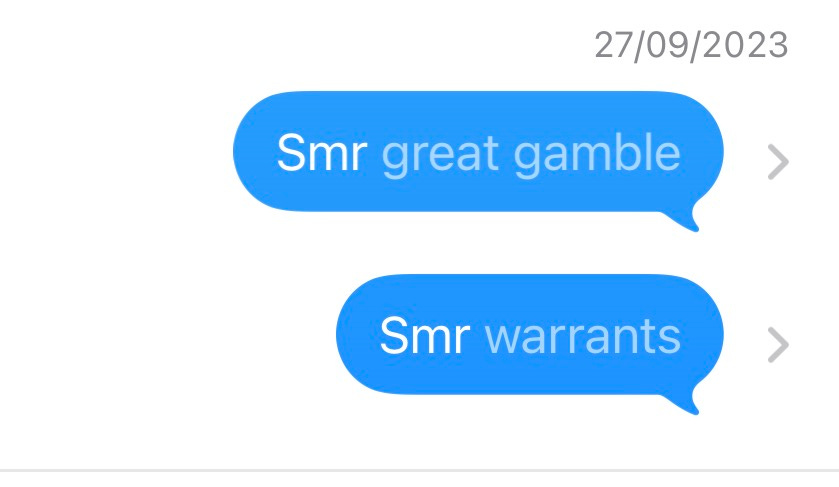
This second part happened to me as well. I was telling my friend in 2023 that SMR is cheap and the warrant will increase astronomically. Here is a part of that text.
And yet when my warrants were up 5,000% I look at my portfolio to see that they disappeared.
Huh?

Apparently my full service broker claims they were not notified of this announcement so my mouth watering gains became $0.00
Right place, wrong time.
This brings me back to Brandt’s point about trader maturity.
In the pits at the CBOT, you learned a healthy respect for your counterparty. The person taking the other side of your soybean trade wasn’t an idiot—they had different information, different timeframes, or different structural advantages you didn’t fully understand.
So it’s not just how you look at things, but how you structure the trade. Icahn couldn’t imagine a Federal Reserve that would create the inflation it did and a decoupling of the global economy, which steadily made Gold more valuable than stocks.
His hedge was his investing prowess in individual stocks (and many were actually commodities) to shorting obvious sectors of weakness.
As we have seen now, the mining companies have woefully lagged behind the commodities themselves.
So when you see a big boy go down for the count, don’t write him off as a dumb ass. Take the time to see things a little differently and don’t be so comfortable to think that it cannot happen to you.
So Silver “crashed” today, and the same Peter Brandt thinks a bit differently than I do on silver, but what I’m thinking about going into the weekend is for subscribers.
Otherwise, here is the famous song which inspired the title of this missive.
Think about the times this happened to you:
