


I do a lot of AI work right now for my own business and plenty of Beta testing. But the one thing I noticed when I started out learning this new industry was the mission creep.
I started using AI because I wanted to do funny pictures and videos but kept getting censored.
And then it had “knowledge” of me and what I was thinking and would censor or shoehorn its response based on what it knows of me instead of WHAT I WANT.
And it would lie, remain inconsistent, be a censoring teacher, and spit out so much drivel…
And the damn fees.
The fees are crushing when you are a power user.
And it’s not fast. Patience is required.
So when someone who seems to give a bird eye view of the landscape like Alex Karp one should listen up.
Alex Karp is the CEO of the multi-billion dollar Palantir which is the one stop shop for AI for government and business purposes.
This wonderful interview and highlights can be read here:
His argument is that the AI you and I are using are not providing their money’s worth and you just don’t realize it.
He went one step further and wrote a manifesto on X.
My thoughts are in bold:
1. Your AI sovereignty dictates your institution’s future.
Buy your own mainframe and operate it
2. Data retention is your treasure. Transfer it at your own peril. Your ability to win is dictated by your ability to recognize and use your unique edges, and you keep winning by compounding the underlying data to generate new insights.
There is nothing free as we have seen with our private data. You cannot do this with your business. At least make them work for it.
3. Tokenmaxxing hijacks your value orientation and decreases your institutional fortitude and intelligence.

And his zinger
There is a reason why those selling tokens refuse to charge based on value.
4. Controlling your weights is controlling your fate. Weights are the distilled form of hard-won, accumulated institutional knowledge. If you let others control your weights, you are allowing them to migrate the alpha of your business to theirs.
5. There is no contradiction between sovereignty and alpha. The architecture that maximally preserves sovereignty is one that enables institutions to own their tribal knowledge, and to compound it as alpha.
That’s why outsourcing all of our industrial base overseas may not have been very wise
6. Politicizing the technical issues involving sovereignty is what your adversary wants.
A trillion dollars of investment is the economy. Don’t trivialize it over political jargon.
7. Real expertise is existential. Allowing politics or favoritism to determine your technical decisions rewards whoever is best at politics, not whoever is right.
Toy Story 5 covers this. Don’t let others tell you what to believe or feel.
8. Learn from institutions that are winning or that have consistently delivered.
And not people that show up on CNBC to sell something. See what works.
9. Only listen to institutions, countries, and people who have a proven record of being right.
Right! Not whose a billionaire or millionaire. But who has results. Its not mutually inclusive. You may be a billionaire but not in what you are being interviewed about.
I read Mr. Karp’s wonderful book and was thinking that if his product really lives by this screed, he’s truly Apple.
Apple thought differently and gave independence to its consumers as opposed to big bad IBM and Microsoft.
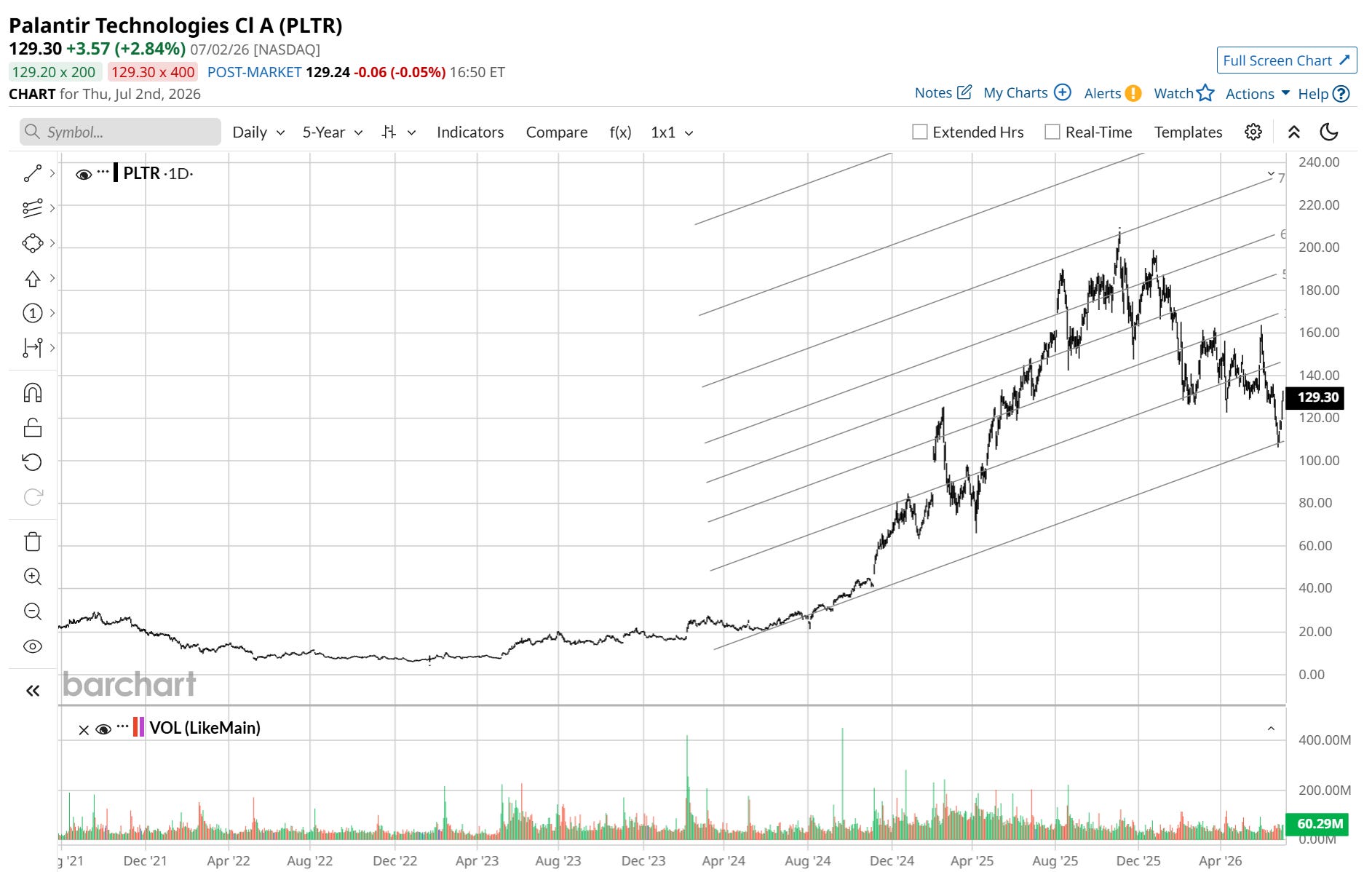
If OpenAI and Anthropic do indeed go public, Palantir may possibly be very undervalued.
When you watch the interview he also mentions that while his company is cash flow positive, his competitors are not.
And in the spirit of 250 years, would you invest in a company that’s pro-USA or a few that are pro-censorship and not help our society grow and thrive (based on public anecdotes)?
There is a lot more to unpack.
So share your thoughts and maybe we can come to a working consensus on AI for yourself and your business.
I’m working on developing AI, amongst other things, where a user rents out the mainframe and we provide the support and development.

Right now, I was tasked with finding the owners of any property in the US. So it’s a fun challenge. What challenges do you want AI to solve?
Eric