

Why successful Exodus movies aren't entertaining
Plus! Never before heard interpretation on why Pharoah changed his mind and what really happened at the splitting of the sea (Here's looking at you Graham Hancock)

There are three movies about Exodus. It seems to be the only Biblical subject Hollywood is willing to produce (sans Mel Gibson) as it bridges all faiths. Yet when they are viewed it’s most likely viewed from the prism of the religion you were raised in. The only three I saw and can think of are:
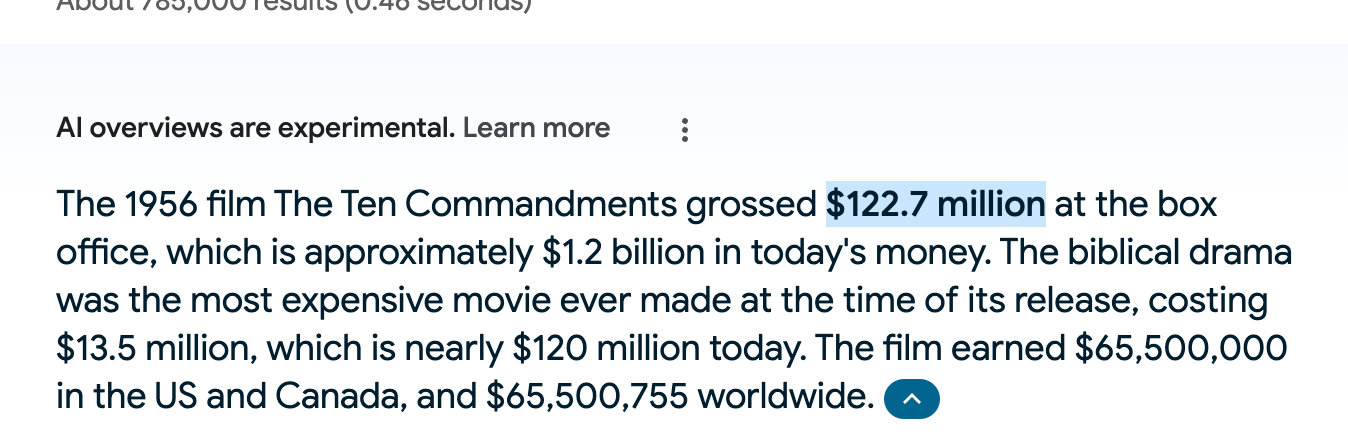
Ten Commandments starring Charlton Heston and Yul Brenner
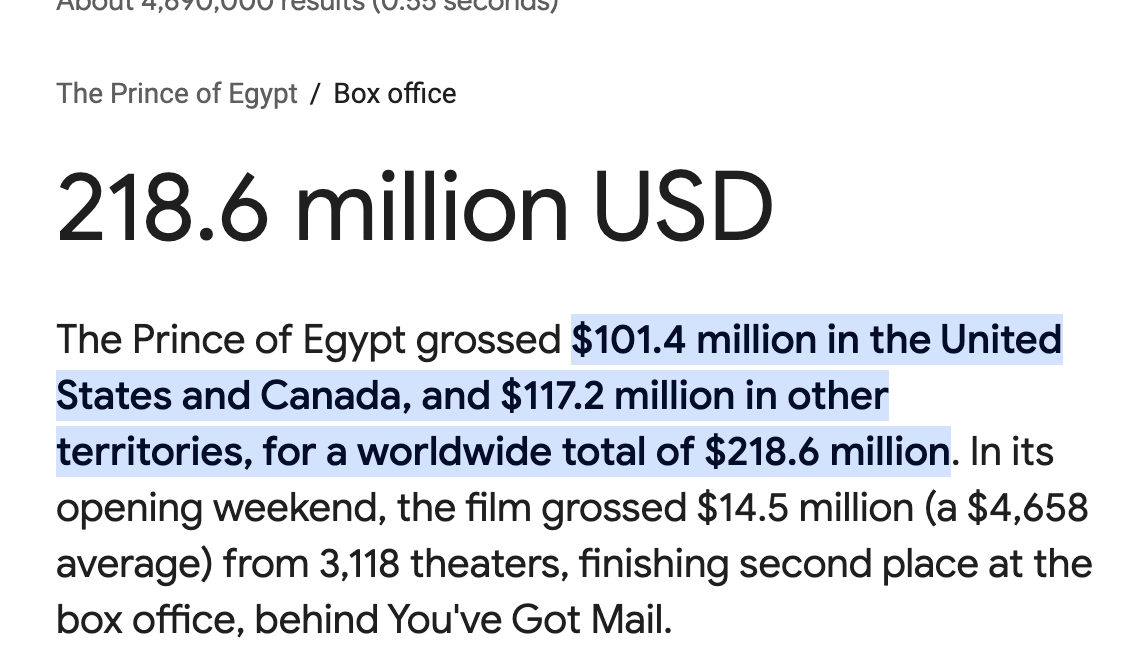
Prince of Egypt produced by Dreamworks ( Spielberg and Katzenberg’s great way to usher in their animation studio)
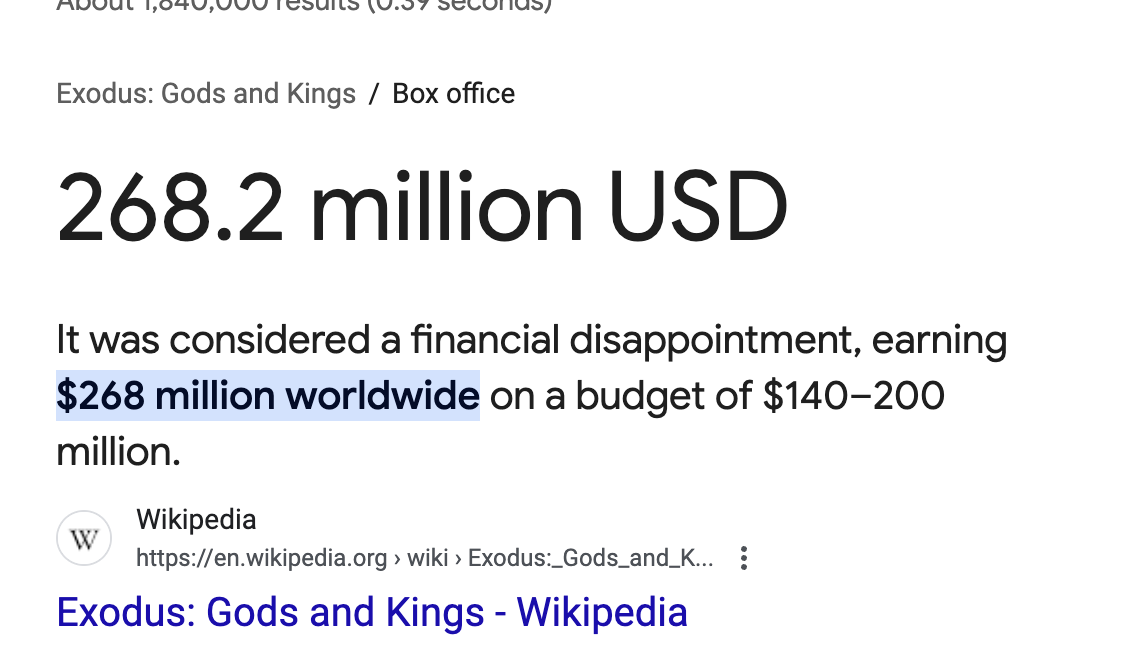
Exodus: Gods and Kings (Batman’s Christian Bale as Moses and Joel Edgerton as Pharoah with Ridley Scott known for Gladiator and Alien)
And lets throw in the story of Jesus to see its Box Office, the Passion of Christ as filmed by Mel Gibson
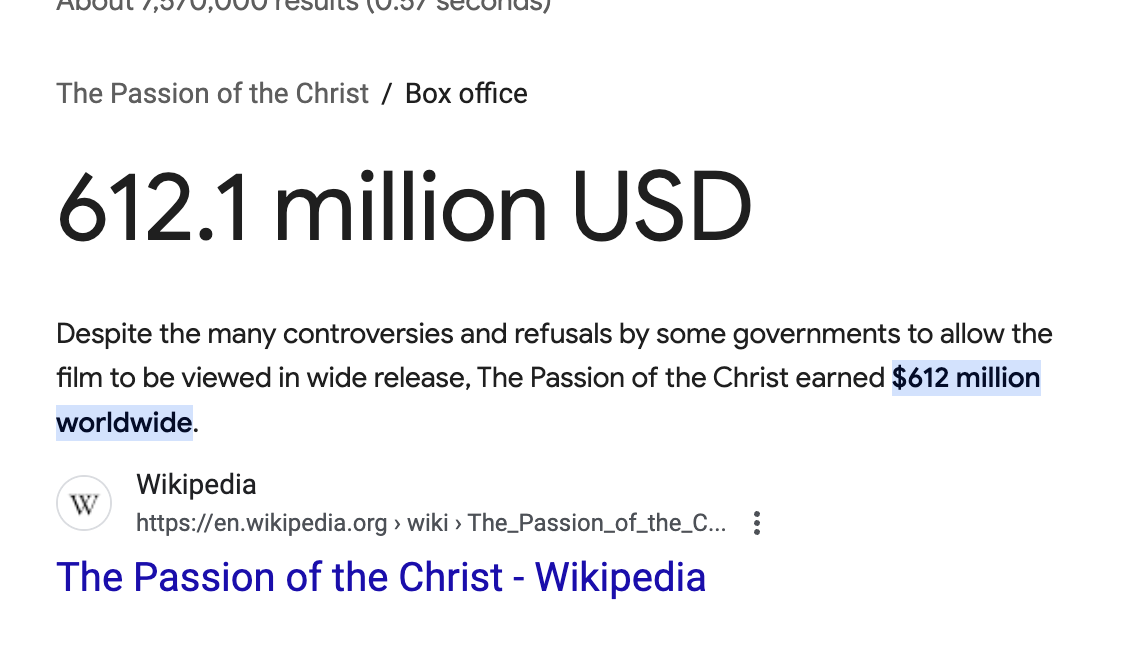
The key takeaway as judged by box office receipts is that you need to treat your subject matter seriously with live action and respect a vision and conception of God. Anyone that mentions Charlton Heston will think of him as Moses. Prince of Egypt was turned into a great animated movie with song and dance where Pharoah and Moses used to be close pals and now not so much. But it does not have the gravitas of great acting. While Exodus: Gods and Kings removed God from the movie and re-imagined the bible narrative as “what-if” it was realistic. Batman isn’t God and shouldn’t have been cast. The story sells itself, just like Marvel movies. Mel Gibson took his story and treated it with the respect and vision he has for his religious view along with his Acadamy Award calibre filmmaking talent (I have not seen the movie but the results speak for themselves).
You cannot remove God from a Biblical movie. Someone really needs to bitch slap Ridley Scott. He can make a movie about aliens with aliens in it. How do you make a movie about the greatest story ever told and not feature God? But only a cute kid who may have been abused by Kiddie Hollywood?
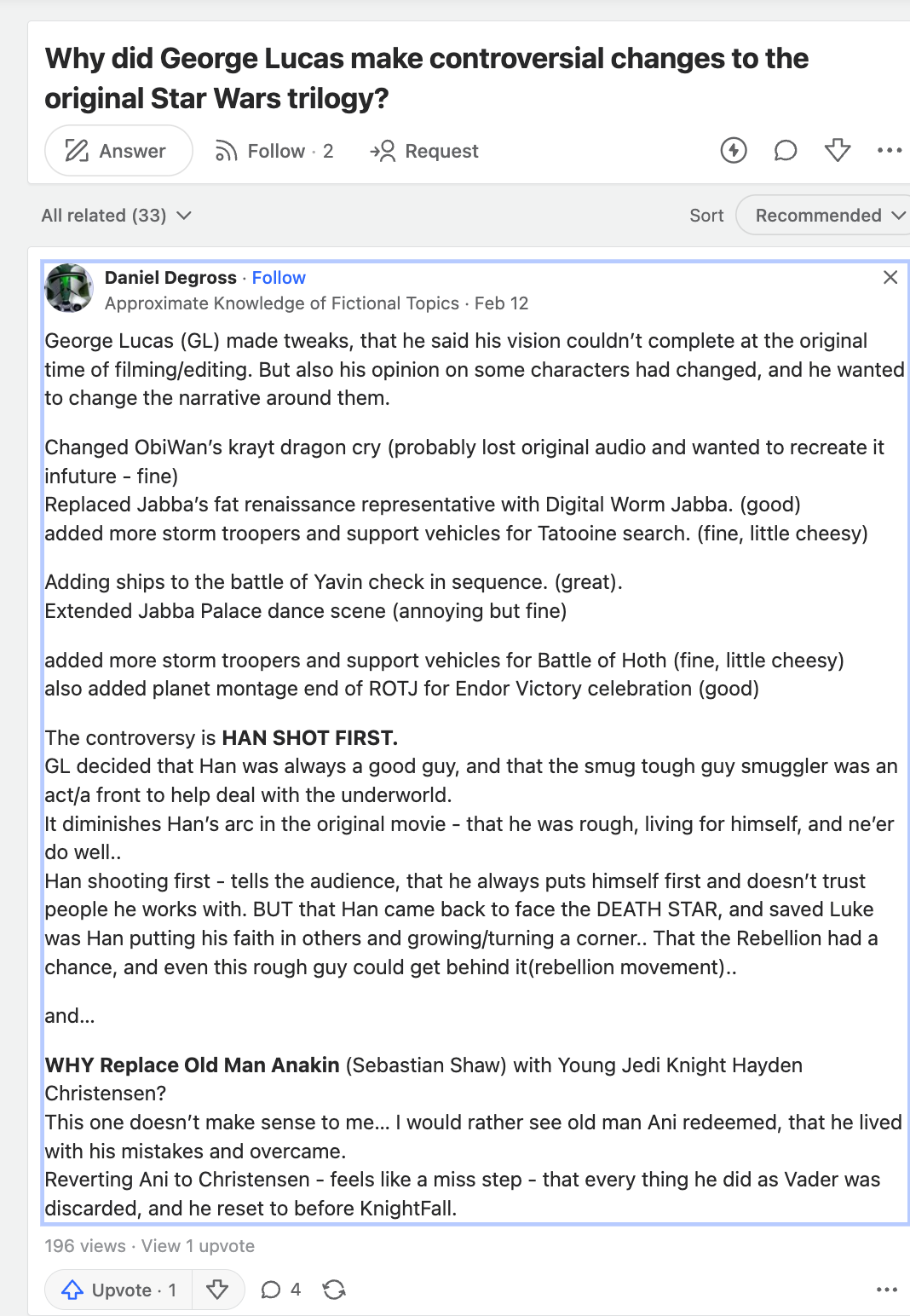
Also lets think demographically, atheists aren’t going to see a movie about the Bible. So why turn off the largest demographic segment? I mean if you have Christian Bale in the movie don’t squander his talents. Ridley Scott knows, and the audience most assuredly does, if you have a great leading actor, you need a dastardly villain. Charlton Heston had Yul Brenner. In this movie, the Pharoah role was more cardboard with a sketch or outline of a backstory. As I will show later on, you don’t need to create a backstory and adapt today’s psychological profile, Egypt had a plethora of them that hungry viewers want to experience (I read Psychology Today anytime I’m in the dentist’s waiting room). While we are on it, making narrative changes of key section of the rise of Moses is quite dubious. He is not just retelling the story of the Bible, but rewriting it. No one liked George Lucas for re-doing the first three movies, imagine this being done to the bible!
Maybe the 1950s Ten Commandments are watchable, but for me, it’s a little outdated. I enjoy watching Prince of Egypt with my kids and singing a tune or two, but for my money I would love to watch a biblical movie that not only respects the content but also applies the great discoveries and research that has occurred. I realize and accept that not everything I “belI'mve” in will shohear. Im not paying to here a choir. Ma,ybe a little but also to be challenged and also lea.something. I learned one thing from Prince of Egypto - I never thought about Moses and Pharoah growing up and being possible friends and the resentment Moses talents had on the young Pharoah. Ridley Scott did nothing except piss me off. Though I did enjoy the scene of the splitting of the scene (even thought not that dramatic) and the chariots chasing the Israelites.
He literally changed the story into an action film. Yet no one came to the movie to see Moses sword fighting prowess. If Ridley did it because Indiana Jones had a knack for the whip, then use a whip at least that’s in the Bible. And speaking of action scenes, Spielberg’s film awakened all levels of Exodus and the Bible interest by having it as a MacGuffin, while we enjoyed the adventure. A MacGuffin is something to keep the characters focused but is not the real essence of the movie.
Now since you have read this far, let me reveal to you FOR THE FIRST TIME in 3000 YEARS what really occurred in the bible.
This idea has germinated in my head since I read Exodus earlier this year and grew more as I tried to write this blog piece repeatedly. I was watching some cheaply produced Egyptian documentaries on Amazon, and my biggest takeaway is that the Hieroglyphics discovered on their walls are the opposite of the mummies we discovered. And after all these years, they are dissected like animals, and nowhere to be found is the magic and mystery of a lost empire. All the grand myth was a dream a vision.
Like any great nation or empire it is mandatory to have a vision to maintain its dominance. Moses with God’s help tore that dream bit by bit.
Now if Ridley Scott wasn’t drinking the cup of Epicurus he would have had an angle that hooked into the audience as Moses destroyed the mighty Egypt’s all encompassing dream. And as a I said before this is not a sword and sandals epic, it’s about dreams. About visions. It’s about he we perceive ourselves. Dreams are the most important part that is gravely missing from recent movies; especially on lofty subjects.
“Not by sword, or might…” as Zechariah puts it. Or as the great Neal Gaiman puts it “What power would HELL have if those here imprisoned were NOT able to DREAM of HEAVEN?”
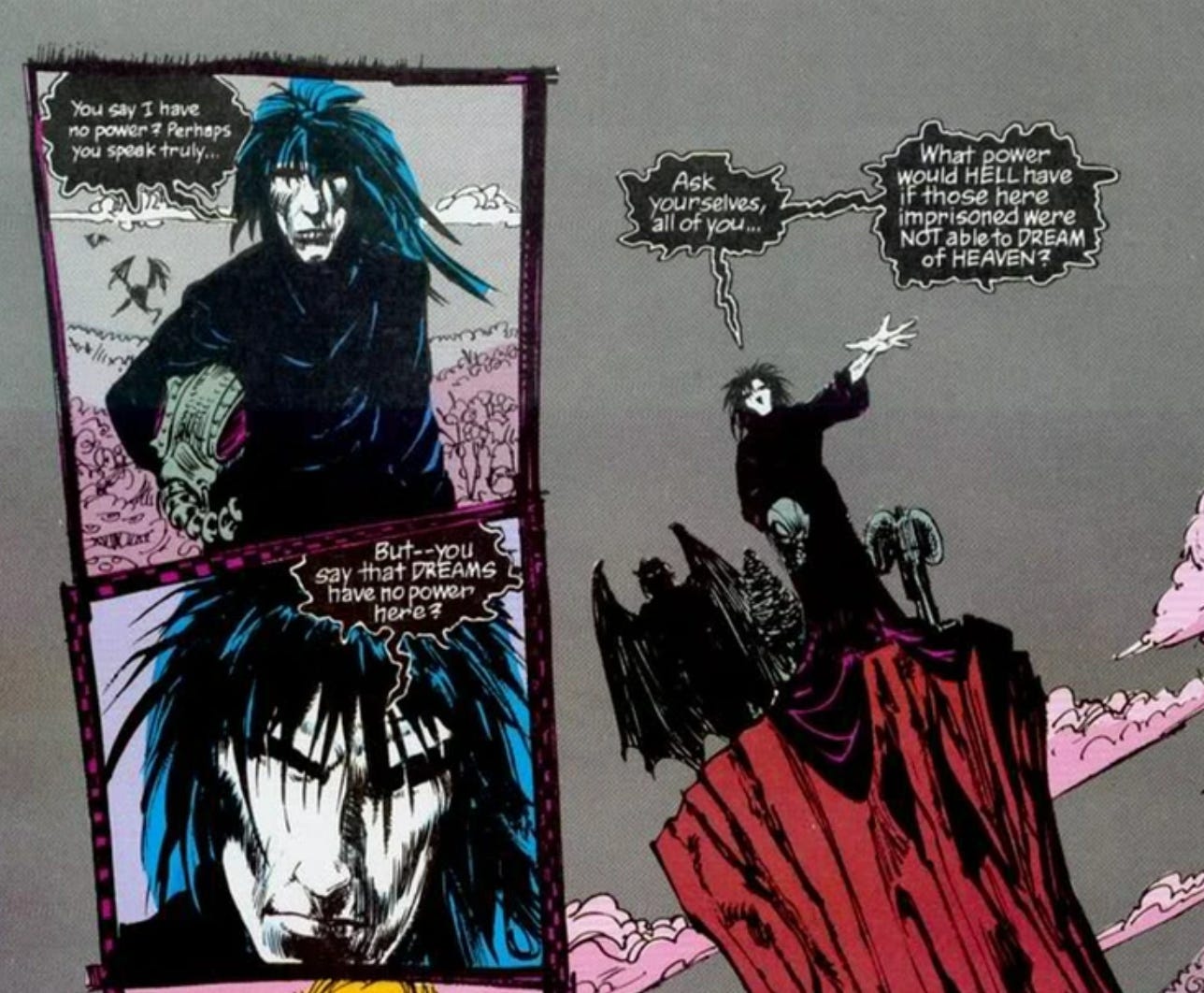
Other than superheroes, the greatest comic character for my money is the Sandman, the master of dreams. For truly, it is dreams that make the world spin. Remember the plot that started it all is Joseph’s dream and the end of the Bible has Moses “seeing” into Israel. Dreams are very powerful.
Now with my eschatological rant finished, lets dig into a few examples from the Bible. The first one courtesy of Baron Sacks who shared his insight on the plague of Darkness. Why is Darkness such a significant plague, right before the killing of the first born? It’s for the fact that Egyptians worshipped the Sun God, Ra. What better way to show how powerless the sun god is by removing all light from the mighty nation.
When I read this, my mind raced to see if there was anything a bit out of the ordinary from the text that can have different meanings if we apply some of what we have learned from archeology and the cinematic arts (how to tell a damn good story).
While researching this blog, this article showed up on Google search and tied the 10 plagues to 10 Gods of Egypt. Great summary to warm us up to the kicker at the end.
Briefly:
Blood of the Nile - the Nile was the life of Egypt and God poisoned it
Crocodile - Some interpret Frogs to be Crocodiles which was a God worshiped in Egypt
Lice - The wizard of Egypt said this is the finger of God. If you had lice you’ll know
Wild Animals/ or Swarm of Flies - Created disorder in a kingdom of order
Pestilence - Killed the Egyptians livestock, which some were worshiped like the cow
Boils - The clean Egyptians instead become unclean while the Israelites are healthy
Hail - Destroyd the crops used for their libations and clothing
Locust - Ate the wheat, which came like clockwork thanks to the Nile river
Darkness - Discussed Earlier
Death of First Born -It was a male-dominated society led by the first born …stay tuned for some trippy thoughts, read below
Now we come to the decision-maker who commands the plot. Without a truly wicked character, we would lose interest. But it’s hard to maintain if God didn’t give Pharoah free will and God both caused the pain and the salvation for the Israelites. Not much of a plot if there is a puppet master controlling the strings. I mean it literally says “God hardened Pharoah’s heart.” There is no denying this statement, which is said on more than one occasion. It is a hard concept to understand and accept if we believe God allows freedom of choice. Some of the greatest sages and philosophers have tackled this, but not from the perspective of Egyptian mythology.
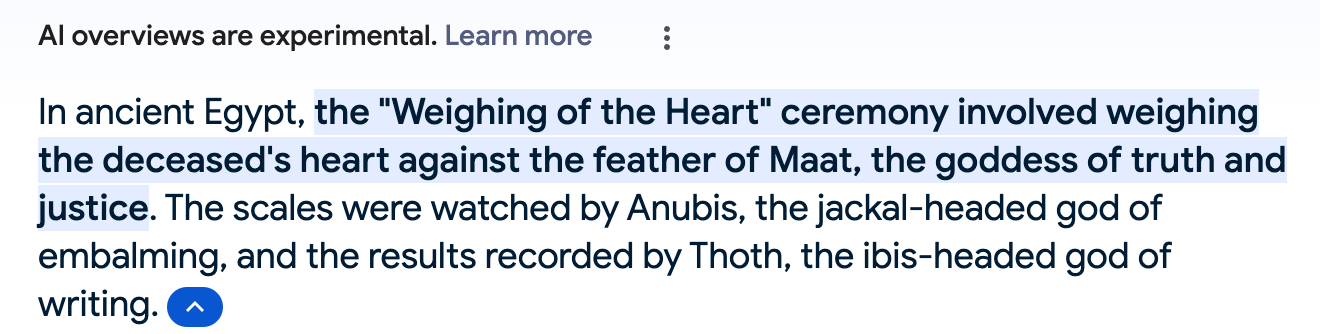
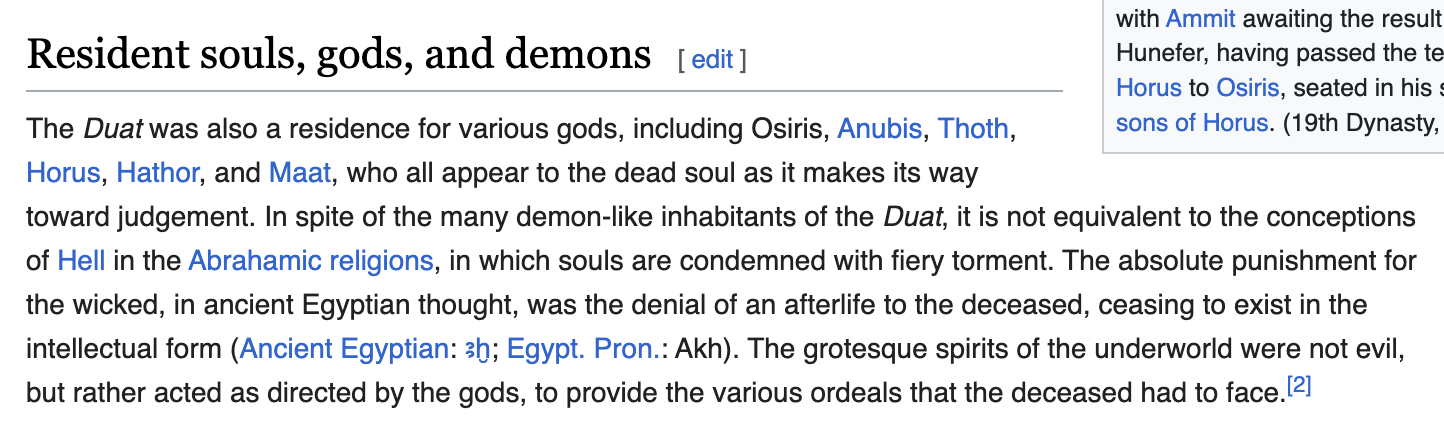
Did you know that the Egyptians believed that to gain eternal life the recently deceased Heart is weighed against a feather. The feather has to be lighter than the heart to gain eternal passage.
and here is the famous Heiroglyph of this:
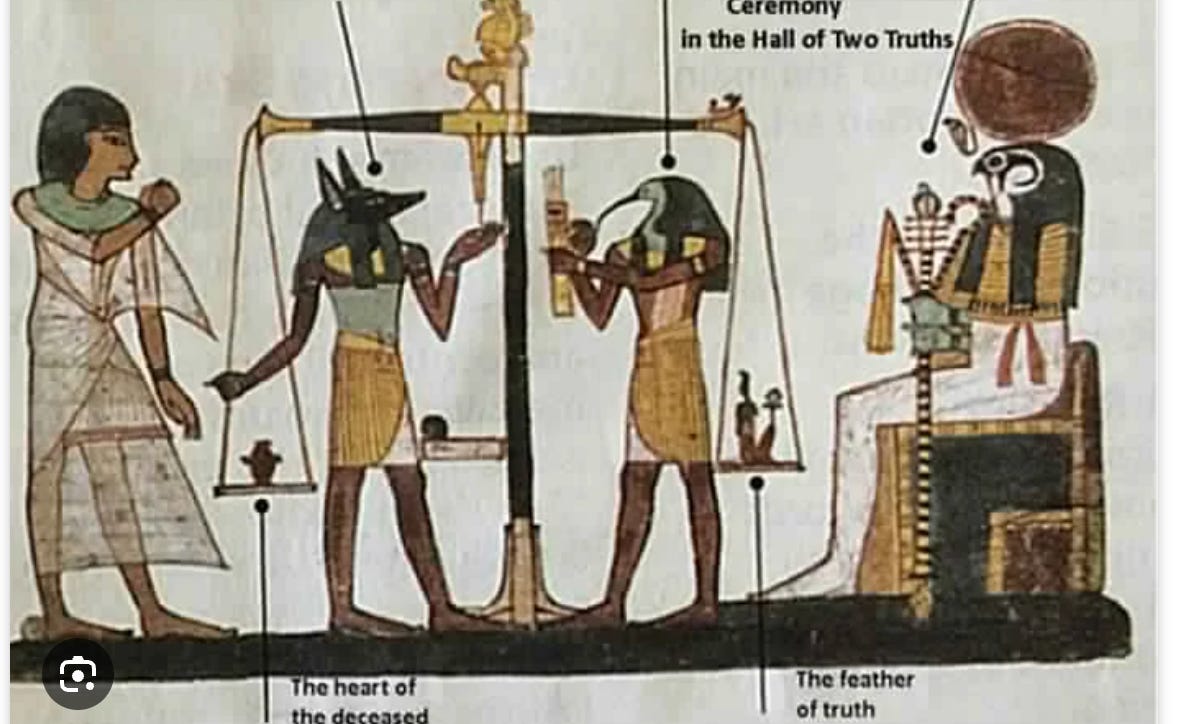
My reading of the Biblical narrative with this in mind wasn’t God hardening Pharoah’s heart but making it “heavy.” God made Pharoah realize in real time, probably from his soothsayers, that he is doomed for eternity, and Pharoah’s free will is how he is going to handle the thought of never gaining eternal bliss in the present. As a result, Pharoah’s choices were his own. Little did he realize, or maybe Egyptian mythology didn’t offer, the ability to do repentance?
With this thought, let’s turn to the Killing of the First Born. The commentaries say Pharoah was “saved” from this plague. But what if he wasn’t? What if he died and was revived? It happens in the movies, a character goes into Heaven or Hell and is reawakened with a new lease on life. And quite possibly his choicest warriors as well. With his heart not hardened, he lets the Israelites leave. He learns repentance.
But one additional thing he will have to learn the hard way is regret. Turning back time is something you can’t do it. Ancient Egypt believes everything essentially stood still. No progress and regress. Another important concept not learned or understood by the Egyptians.
The Jews of today read on Passover the story of Exodus in what is known as the Haggada. In it, the sages say that the drowning of Pharoah’s army was worse than the 10 plagues. How can that be when it’s just the army and not the entire nation?
I feel that this is where the human element plays a part and not the Gods of Egypt.
We first encounter repentance and then regret. What other strong emotions would break the back of Egypt?
First, the mighty Egyptian empire that is used to nothing changing and a steady cyclical rhythm has to adapt to the beauty of life but also the toughest to accept: the randomness, the unknowable, and the mighty becoming weak.
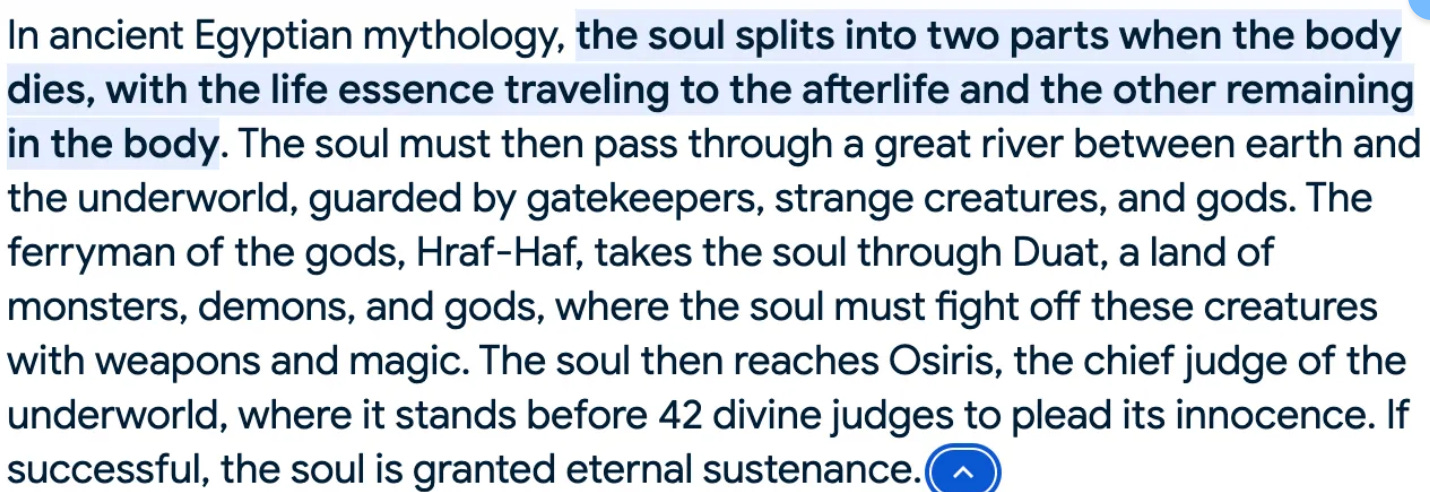
The splitting of the sea, I feel, is a physical manifestation of God sending Pharoah and his soldiers to the afterlife ignobly. For them in the afterlife they would have to fight monsters to get to their version of paradise, but there are no monsters to speak of heresince they are the monsters who not only enslaved the Israelites and attempted to kill all of its males. Their vision of the Garden of Eden has been shattered, and like Adam and Eve, they will need to start again. It won’t be provided for them.
Loneliness. Maybe that’s the most powerful plague. No one to help them. No Deux Ex Machina.
What is interesting is that to this day we dissect Egyptian mummies. We treat them like experimental mice. No rest for these humans. All their philosophy of life from nationhood to their mummification proved useless. They preserved themselves so we can study how they lived.
Now the story of Exodus wouldn’t be complete as told by the three movies above without the giving of the Ten Commandments. I always felt the scene is reminiscent of the laser shows at the natural science museums on Saturday night courtesy of Pink Floyd. (Hopefully, we are not some Lego pieces seeing our master like in Lego Movie)

The movie always ends on the triumphal note of receiving the 10 commandments.
This led to the greatest civilization yet to walk this fine earth: Western Civilization.
The 10 cardinal truths -
There is a God that freed you from lies and falsehood
No other God as its completely pointless as I have demonstrated clearly
Don’t use God in vain - respect the higher power. Don’t rationalize god to do your bidding.
Respect the sabbath - vacation woohoo. You’re not a slave. Contemplate your existence.
Respect your parent - who came before and the heritage that leads to love of God
Don’t kill - who are you to decide life or death?
Don’t steal - listen, if I cant find my car keys i’m annoyed
Don’t commit adultery - one way to stir up the pot (how can you respect your parents for doing this! it breaks the chain of command)
Don’t bear false witness - you are breaking reality
Don’t covet - when your jealous - you may break 1- 9. You are provided for your needs. Have some faith!
The Israelites received the Ten Commandments directly from the voice of God and were afraid to die and asked Moses to represent them. After seeing how God handled the Egyptians, they feared how imperfect they were or questioned how they can reasonably maintain a close holiness with God for 24 hours a day. Can you imagine your parents monitoring you? It’s unsustainable. Everyone needs some distance but not too much or you’ll lose your tether.
Even if I’m completely wrong, if you read this to the end it kept you thinking, which a weighty movie should attempt to do.
Ridley Scott is a great filmmaker. But I think he along with Hollywood believe the same same thing about themselves as did Pharoah. I humbly request that Mr. Scott show some humility and respect for the source material - and that is how you get people into the theatre which he didn’t do.